
Robert G Lee
Blackstone's Statutes on Public Law and Human Rights 2009-2010 (Blackstone's Statute Book Series)
Rs. 7,500
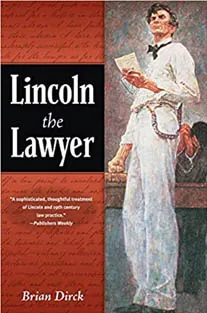
Brian Dirck
University of Illinois Press
Despite historians’ focus on the man as president and politician, Abraham Lincoln lived most of his adult life as a practicing lawyer. It was as a lawyer that he fed his family, made his reputation, bonded with Illinois, and began his political career. Lawyering was also how Lincoln learned to become an expert mediator between angry antagonists, as he applied his knowledge of the law and of human nature to settle one dispute after another. Frontier lawyers worked hard to establish respect for the law and encourage people to resolve their differences without intimidation or violence. These were the very skills Lincoln used so deftly to hold a crumbling nation together during his presidency.
The growth of Lincoln’s practice attests to the trust he was able to inspire, and his travels from court to court taught him much about the people and land of Illinois. Lincoln the Lawyer explores the origins of Lincoln’s desire to practice law, his legal education, his partnerships with John Stuart, Stephen Logan, and William Herndon, and the maturation of his far-flung practice in the 1840s and 1850s. Brian Dirck provides a context for law as it was practiced in mid-century Illinois and evaluates Lincoln’s merits as an attorney by comparison with his peers. He examines Lincoln’s clientele, his circuit practice, his views on legal ethics, and the supposition that he never defended a client he knew to be guilty. This approach allows readers not only to consider Lincoln as he lived his life–it also shows them how the law was used and developed in Lincoln’s lifetime, how Lincoln charged his clients, how he was paid, and how he addressed judge and jury.
The book
Despite historians’ focus on the man as president and politician, Abraham Lincoln lived most of his adult life as a practicing lawyer. It was as a lawyer that he fed his family, made his reputation, bonded with Illinois, and began his political career. Lawyering was also how Lincoln learned to become an expert mediator between angry antagonists, as he applied his knowledge of the law and of human nature to settle one dispute after another. Frontier lawyers worked hard to establish respect for the law and encourage people to resolve their differences without intimidation or violence. These were the very skills Lincoln used so deftly to hold a crumbling nation together during his presidency.
The growth of Lincoln’s practice attests to the trust he was able to inspire, and his travels from court to court taught him much about the people and land of Illinois. Lincoln the Lawyer explores the origins of Lincoln’s desire to practice law, his legal education, his partnerships with John Stuart, Stephen Logan, and William Herndon, and the maturation of his far-flung practice in the 1840s and 1850s. Brian Dirck provides a context for law as it was practiced in mid-century Illinois and evaluates Lincoln’s merits as an attorney by comparison with his peers. He examines Lincoln’s clientele, his circuit practice, his views on legal ethics, and the supposition that he never defended a client he knew to be guilty. This approach allows readers not only to consider Lincoln as he lived his life–it also shows them how the law was used and developed in Lincoln’s lifetime, how Lincoln charged his clients, how he was paid, and how he addressed judge and jury.
Details
Same shelf
Robert G Lee
Rs. 7,500
Dr Mridula Mishra
Rs. 632
SAHRDC
Rs. 560
K Veeraswami
Rs. 640
Frank Ching
Rs. 1,000
Madhav Prasad Acharya, Ganesh Bahadur Bhattarai
Rs. 495
S.R Myneni
Rs. 800
Angela Ward
Rs. 29,500
Derek Addison
Rs. 4,750
Masae Kato
Rs. 12,750
WJ Brown
Rs. 3,200
K D Ewing
Rs. 4,800
Rs. 4,500× 8