
John D Skrentny
The Minority Rights Revolution
Rs. 6,900
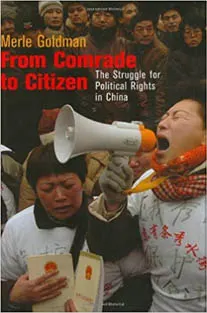
Merle Goldman
Harvard University Press
A leading scholar of China’s modern political development examines the changing relationship between the Chinese people and the state. Correcting the conventional view of China as having instituted extraordinary economic changes but having experienced few political reforms in the post-Mao period, Merle Goldman details efforts by individuals and groups to assert their political rights.
China’s move to the market and opening to the outside world have loosened party controls over everyday life and led to the emergence of ideological diversity. Starting in the 1980s, multi-candidate elections for local officials were held, and term limits were introduced for communist party leaders. Establishment intellectuals who have broken away from party patronage have openly criticized government policies. Those intellectuals outside the party structures, because of their participation in the Cultural Revolution or the 1989 Tiananmen Square demonstrations, have organized petitions, published independent critiques, formed independent groups, and even called for a new political system.
Despite the party’s repeated attempts to suppress these efforts, awareness about political rights has been spreading among the general population. Goldman emphasizes that these changes do not guarantee movement toward democracy, but she sees them as significant and genuine advances in the assertion of political rights in China.
The book
A leading scholar of China’s modern political development examines the changing relationship between the Chinese people and the state. Correcting the conventional view of China as having instituted extraordinary economic changes but having experienced few political reforms in the post-Mao period, Merle Goldman details efforts by individuals and groups to assert their political rights.
China’s move to the market and opening to the outside world have loosened party controls over everyday life and led to the emergence of ideological diversity. Starting in the 1980s, multi-candidate elections for local officials were held, and term limits were introduced for communist party leaders. Establishment intellectuals who have broken away from party patronage have openly criticized government policies. Those intellectuals outside the party structures, because of their participation in the Cultural Revolution or the 1989 Tiananmen Square demonstrations, have organized petitions, published independent critiques, formed independent groups, and even called for a new political system.
Despite the party’s repeated attempts to suppress these efforts, awareness about political rights has been spreading among the general population. Goldman emphasizes that these changes do not guarantee movement toward democracy, but she sees them as significant and genuine advances in the assertion of political rights in China.
Details
Same publisher
John D Skrentny
Rs. 6,900
John Rawls
Rs. 1,272
Stuart Banner
Rs. 9,750
Richard A Posner
Rs. 8,450
Thomas Piketty
Rs. 1,600
Branko Milanović
Rs. 3,560
Same shelf
Roscoe Pound
Rs. 650
Harry Blagg
Rs. 9,600
VL Mony
Rs. 380
Helen Fenwick
Rs. 10,500
Vijay Kumar
Rs. 1,432
John Forge
Rs. 16,800
Peter R Baehr & Monique Castermans-Holleman
Rs. 12,745
Robert D Hormats
Rs. 2,400
Michael Zander
Rs. 10,500
Steve Foster
Rs. 8,250
Bishal Khanal
Rs. 1,995
Alex Steuart Williams
Rs. 880
Rs. 3,200× 2