
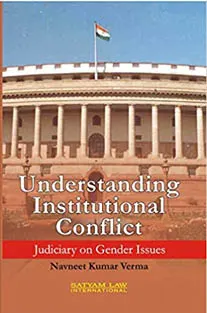
Navneet Kumar Verma
Understanding Institutional Conflict: Judiciary on Gender Issues
Rs. 1,150
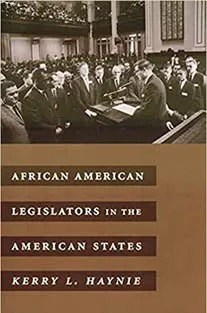
Kerry L Haynie
Columbia University Press
Has black inclusion in the political process changed political institutions and led to more black influence in the governmental process? How do African American legislators balance racial interests with broader issues of government? And how is their effectiveness subjectively perceived and objectively evaluated?
In one of the first book-length studies to analyze the behavior of African American state legislators in multiple legislative sessions across five states, Kerry Haynie has compiled a wealth of valuable data that reveals the dynamics and effectiveness of black participation in the legislative process. Owing to the increasing role of state government in administering what he defines as key “black issues”― education, healthcare, poverty/social welfare, civil rights, and children’s issues―Haynie focuses on bills introduced in these categories in Arkansas, Illinois, Maryland, New Jersey, and North Carolina.
The book reveals how responsive political institutions have been to the nation’s largest minority group. It explores the question of how legislators deal with the “duality dilemma”―which requires them to be both responsible legislators and race representatives―and whether agendas should be “deracialized” in order to appeal to a broader constituency. Along with numerous statistical charts illustrating everything from representation on house standing committees to a ranking of the fifteen legislative sessions by quartiles of African American political incorporation, a useful and revealing portrait emerges―one that will fuel debate and inform future discussions of the role of African Americans in the political process.
The book
Has black inclusion in the political process changed political institutions and led to more black influence in the governmental process? How do African American legislators balance racial interests with broader issues of government? And how is their effectiveness subjectively perceived and objectively evaluated?
In one of the first book-length studies to analyze the behavior of African American state legislators in multiple legislative sessions across five states, Kerry Haynie has compiled a wealth of valuable data that reveals the dynamics and effectiveness of black participation in the legislative process. Owing to the increasing role of state government in administering what he defines as key “black issues”― education, healthcare, poverty/social welfare, civil rights, and children’s issues―Haynie focuses on bills introduced in these categories in Arkansas, Illinois, Maryland, New Jersey, and North Carolina.
The book reveals how responsive political institutions have been to the nation’s largest minority group. It explores the question of how legislators deal with the “duality dilemma”―which requires them to be both responsible legislators and race representatives―and whether agendas should be “deracialized” in order to appeal to a broader constituency. Along with numerous statistical charts illustrating everything from representation on house standing committees to a ranking of the fifteen legislative sessions by quartiles of African American political incorporation, a useful and revealing portrait emerges―one that will fuel debate and inform future discussions of the role of African Americans in the political process.
Details
Same shelf
Navneet Kumar Verma
Rs. 1,150
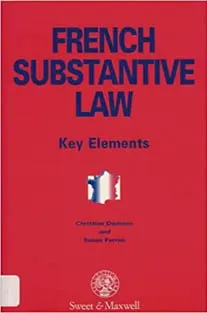
Christian Dadome & Susan Farran
Rs. 3,120
Christopher Baker
Rs. 29,990
Rs. 995
Jeffrey Hill
Rs. 2,798
David Callund, Melvin Nightingale
Rs. 17,550
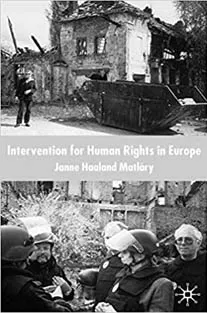
Janne Haaland Matlary
Rs. 27,750
Rs. 795
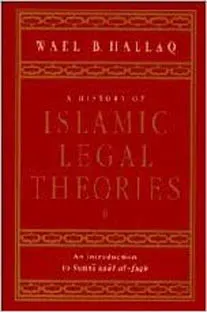
Wael B Hallaq
Rs. 21,600
Jusitce AK Patnaik
Rs. 3,520
H L Kumar
Rs. 1,150
Dr B Malik
Rs. 4,000
Rs. 12,000× 3